
Latest News
Newsroom
2023-02-21
Increasingly frequent anomalies? Extreme weather in 2022
|
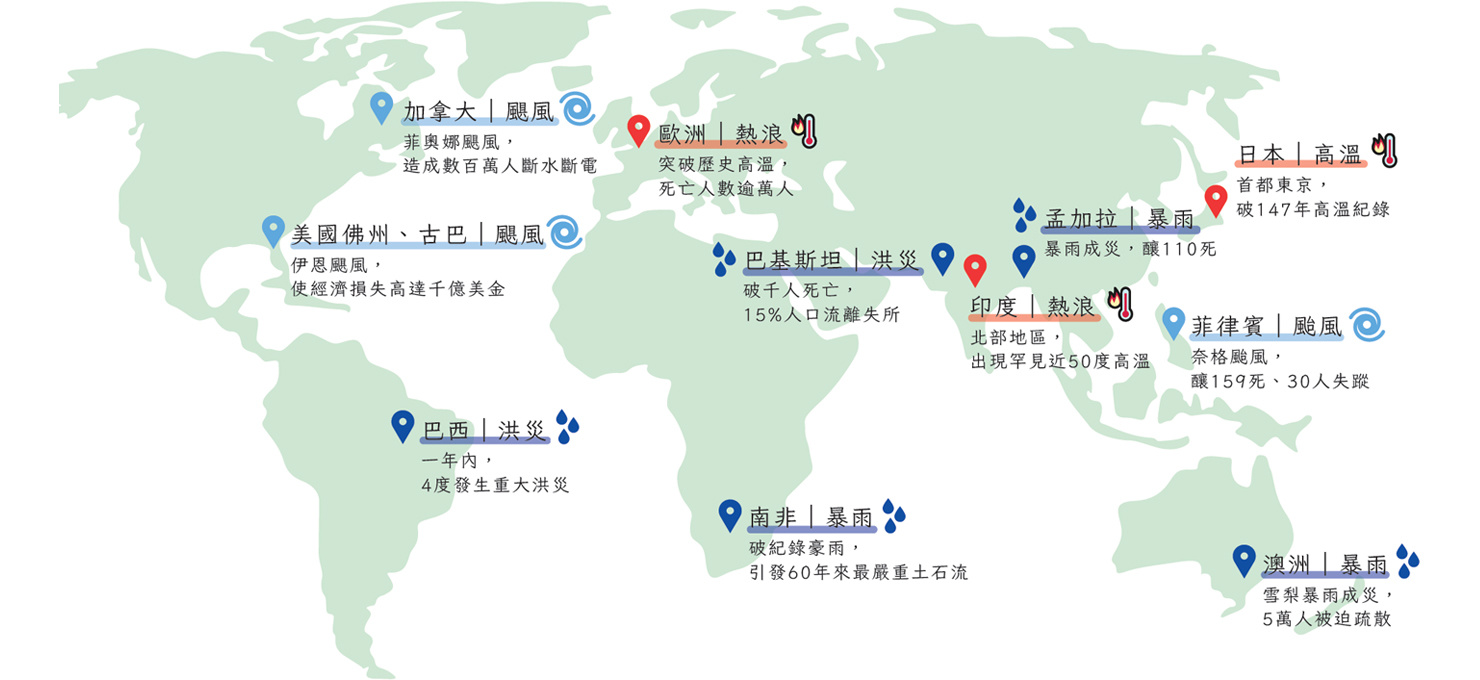
Europe's mainland, renowned for its pleasant climate that draws countless travelers, experienced its most severe heatwave on record from June to August 2022. By mid-July, temperatures across parts of Europe began breaking historic highs, with Portugal and Spain reaching unprecedented peaks of 45.7°C and 47°C, respectively. Meanwhile, the UK even recorded ground temperatures as high as 54°C, prompting the country to issue its very first-ever red-level heat warning. Meanwhile, London Luton Airport temporarily suspended operations after its runway reportedly "melted" due to the extreme heat. The heatwave not only brings inconvenience but has also claimed countless lives: According to the World Health Organization (WHO), Europe’s scorching summer in 2022 claimed at least 15,000 lives, with Spain and Germany suffering the most severe casualties. Climate scientists attribute these extreme heat events to climate change and predict that heatwaves in Europe will become increasingly frequent in the future. |
|
|
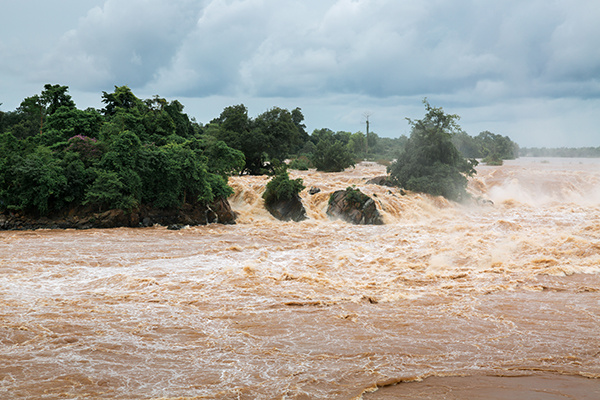
High temperatures brought heatwaves, which in turn warmed sea surface temperatures and intensified monsoon rains, plunging Pakistan into its worst flooding crisis in nearly a century—beginning in mid-June 2022. At one point, the relentless monsoon downpours submerged as much as one-third of Pakistan’s land area under floodwaters. By the end of September, a staggering 33 million people had been forced to flee their homes as climate refugees, while approximately 1,500 lives were tragically lost. For Pakistan, a nation responsible for just 1% of global carbon emissions, these devastating consequences are an unbearable burden indeed! "What happens in Pakistan won’t stay in Pakistan." Pakistani Prime Minister Shehbaz Sharif urged at the United Nations Climate Conference (COP27), emphasizing that no one can remain unaffected by climate change driven by global warming. He warned that if urgent action isn’t taken, the extreme climate disasters Pakistan is facing today could soon strike anyone’s home tomorrow. |
|
|
The increasingly warm oceans have created the perfect environment for hurricanes to develop, enabling them to unleash devastating power. In September 2022, Hurricane Ian made its presence unmistakable as a clearly defined eye appeared in the southeastern United States, silently signaling its formidable threat. Ultimately, Ian made landfall along southwestern Florida as a Category 4 hurricane—the most intense level—marking the first time since Hurricane Charley in 2004 that a Category 4 storm directly impacted the region once again. The torrential rains washed away roads, while fierce winds ravaged power lines—Hurricane Ian’s devastating impact has left Florida reeling. Despite the urgent evacuation of 2.5 million residents, the storm has claimed over a hundred lives, left more than 10,000 people missing, and plunged over 1.5 million households into darkness. Economic losses are already estimated to surpass $100 billion, making this the costliest climate disaster of 2022! |
|
|
According to NASA's analysis from the United States, Earth's average temperature in 2022 was already about 1.11°C higher than at the end of the 19th century. The resulting extreme weather patterns—driven by global warming—have not only caused widespread destruction of homes and severe economic setbacks, but also claimed lives whose value is immeasurable. Currently, most experts predict that 2023 will be a "La Niña year." While the intensity of the La Niña phenomenon still needs to be observed, if its hallmark feature—the unusually warm waters in the eastern Pacific Ocean—truly takes hold, combined with the ongoing effects of climate change, we may well face the hottest year on record. At the same time, extreme weather conditions are likely to worsen even further. Due to negligence in preparing for climate anomalies, severe losses have ensued. Global warming is now inevitable, and as extreme weather events continue to occur more frequently, governments must strengthen their ability to respond and enhance disaster-prevention measures. At the same time, individuals should consistently maintain a strong awareness of disaster preparedness, proactively taking steps to prevent potential crises. Additionally, by incorporating everyday actions that reduce carbon emissions and mitigate the greenhouse effect—such as opting for public transportation for daily commutes or refusing single-use plastic utensils—we can collectively help cool down the planet and restore its once-pleasant climate! |



Equipment and Tooling
Latest News
Contact Information
Contact Number:+886 2 2658-1018
Taiwan HQ : 11F.-5, No. 408, Ruiguang Rd., Neihu Dist., Taipei City 114752, Taiwan (R.O.C.)
E-mail:service@deluxe-tech.com
Join the “DELUXE GREEN Plant Fiber Alliance”
Want to participate in the mission of 'Greening the World'? Contact us now!
Copyright©2025 Deluxe Technology Group Co., LTD www.300.cn