
Latest News
Newsroom
2023-03-28
Kick-off! FIFA World Cup’s Race to Achieve Net-Zero Carbon Emissions
|
Though the battle on the green grass has temporarily come to a close, the conversation about "green sustainability" at the sidelines of the stadium is far from over. As reducing greenhouse gas emissions becomes a global trend, FIFA—short for the International Football Association—began calculating the carbon footprint of its tournaments starting with the 2006 World Cup in Germany. Sixteen years later, Qatar has boldly declared it will host the first-ever "carbon-neutral" World Cup, aligning itself with international goals for sustainable development. This ambitious pledge has captured worldwide attention—but what concrete steps is Qatar actually taking? And what kind of discussions has this initiative sparked? |
|
|
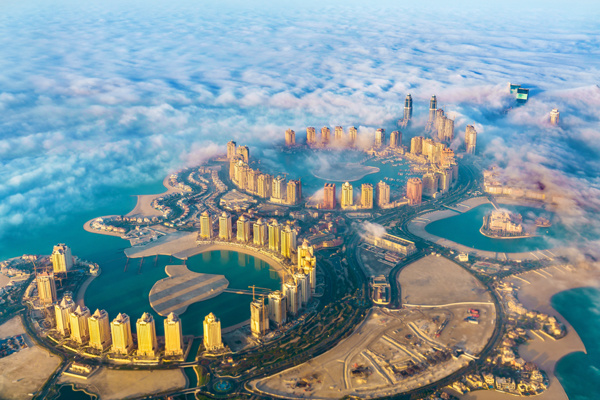
Following Japan and South Korea's joint hosting in 2002, Qatar’s successful bid has made it the third Asian nation in World Cup history to host the tournament—breaking Switzerland’s record as the "smallest host country." With a land area of just 11,000 square kilometers, all of this year’s match venues are conveniently located within a 55-kilometer commuting radius of the capital, Doha. Compared to other nations with vast territories that require domestic flights to reach the stadiums, Qatar’s compact layout allows athletes, staff, and spectators to easily access their destinations via public transportation. This unique advantage not only gave Qatar a significant edge during the bidding process but also positions the country well to significantly reduce one of the World Cup’s biggest carbon footprints: transportation-related emissions.
|
|
|
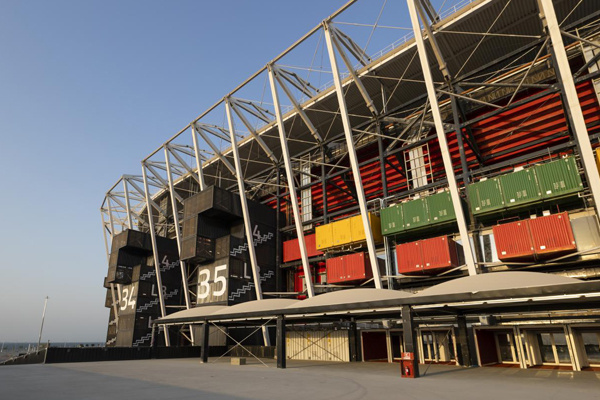
As the first host nation since World War II that never qualified for a World Cup finals, Qatar has dramatically renovated its country’s sole existing stadium while simultaneously constructing seven new football venues. Among them, the most distinctive is undoubtedly the "Stadium 974 (also known as Ras Abu Aboud)," named after Qatar’s international telephone code +974. The stadium itself is ingeniously built entirely from 974 large, recyclable shipping containers—so modular, in fact, that it can be dismantled entirely after the tournament and reassembled when the next major event rolls around. This groundbreaking design has earned it widespread acclaim as "the first-ever 'completely demountable stadium' in World Cup history." Although all eight stadiums used in this year’s event have earned a GSAS (Global Sustainability Assessment System) certification of four stars or higher, the sheer scale of the new venues—each costing between $6.5 billion and $10 billion to build and literally rising out of the desert—makes it nearly impossible to fathom the immense human effort and resources required during construction. As a result, no matter how prestigious their sustainability credentials may be, they pale in comparison. |
|
|
Qatar, located in the Middle East, experiences average summer temperatures that can soar as high as 41.5°C—too extreme for athletes to handle comfortably. In response, FIFA has, for the first time, moved the World Cup finals—from their usual schedule in May to July—to November and December. To further address the heat challenge, Qatar has even announced it will "air-condition entire stadiums" during matches. Such bold measures have not only sent shockwaves through the football community but have also left environmental groups utterly astonished. To quell the controversy, Qatar has pledged that these unavoidable carbon emissions will be offset through tree planting or by purchasing carbon credits. However, environmental groups remain skeptical, pointing out that even with the intention of achieving sustainable development goals via "carbon neutrality," if the event organizers only account for carbon emissions generated "during the tournament itself," the resulting figures will significantly underestimate the event's overall carbon footprint. Moreover, how can they possibly ensure they’ve bought enough carbon credits to fulfill their promise of hosting the "first-ever 'carbon-neutral' World Cup" when the actual emissions haven’t yet been determined—especially before the event officially wraps up? Ultimately, this initiative risks being nothing more than a superficial exercise in "greenwashing."
As the pinnacle of football, the quadrennial World Cup not only captures the world's attention but also serves as an excellent opportunity for host nations to promote their countries and showcase their national strength. Meanwhile, as environmental protection issues continue to gain prominence, the event organizers' "carbon management capabilities" have emerged as an increasingly important focal point of interest. Just as the final whistle blew at the Qatar World Cup, it was already confirmed that the 2026 World Cup will be jointly hosted by the United States, Canada, and Mexico. This will mark the first time the tournament is co-hosted by three countries, and the number of teams qualifying for the finals will expand from the current 32 to 48. Naturally, the massive crowds, heightened global buzz, and accompanying carbon emissions expected during this expanded event will once again draw intense international scrutiny. While Qatar’s World Cup may not have been entirely flawless in its environmental efforts, it has nonetheless provided us with ample room for innovative thinking and continuous improvement. Only by constantly reflecting on and learning from past experiences can we inspire athletes—not only to strive for personal and national glory on the field, but also to help us raise the "Victory Trophy of Energy Conservation and Carbon Reduction" right here on the sidelines! |



Equipment and Tooling
Latest News
Contact Information
Contact Number:+886 2 2658-1018
Taiwan HQ : 11F.-5, No. 408, Ruiguang Rd., Neihu Dist., Taipei City 114752, Taiwan (R.O.C.)
E-mail:service@deluxe-tech.com
Join the “DELUXE GREEN Plant Fiber Alliance”
Want to participate in the mission of 'Greening the World'? Contact us now!
Copyright©2025 Deluxe Technology Group Co., LTD www.300.cn